Daisy Jones
Daisy Jones & the SixDaisy Jones is a singer and songwriter whose career turns on a demand for authorship: she will not remain a beautiful presence behind someone else’s work. Born into privilege and early fame on the Sunset Strip, she develops from a teenager seeking entry into the music scene into an indispensable member of The Six. Her rise makes her an emblem of rock stardom, but her eventual departure from the band and sustained recovery give her story a different measure of success: a life she can claim as her own.
Identity and Early Life
Daisy was born in 1951 and grew up in the Hollywood Hills of Los Angeles, the daughter of British painter Frank Jones and French model Jeanne LeFevre. A biographer describes her as wealthy, strikingly beautiful, and unusually free to move among artists, clubs, and drugs. Those advantages provide access, but they do not give her a settled place in the world. As a young teenager, she was already making a name for herself around the Sunset Strip, close enough to walk there from home and eager to escape the confines of the house.
At about fourteen, Daisy went to the Strip despite being too young to enter its bars and clubs. She wanted to belong among the groupies who gathered outside, and learned to imitate the gestures and appearance she associated with them. One night outside the Whisky a Go Go, she borrowed a cigarette from a roadie for the Byrds and tried to conceal that it was her first. Recounting the episode later, she recognized how uncertain and awkward she had been. The memory locates her early ambition in a search for belonging: she first approached the music world by trying to look as though she already belonged in it.
From Muse to Songwriter
Daisy’s first place in the music scene was often defined by what others could make of her. She understood that people expected her to inspire a man’s ideas rather than produce work of her own, and she rejected that role. Simone Jackson was the person who encouraged her to use her talent; in Simone’s account, others tried to advance themselves through Daisy instead. Daisy’s response was to begin writing her own material, not to accept the position of another person’s muse.
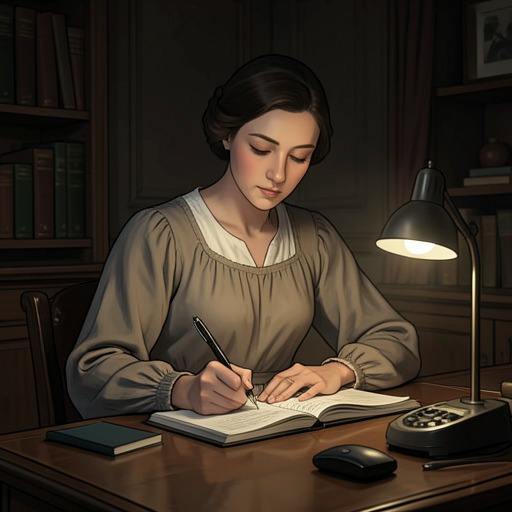
She had no musical training, and her tools were a pen and paper. Even so, her songbook grew to more than a hundred rough song sketches. That body of work matters both as evidence of discipline and as an alternative route into a career built around performance and image. Daisy did not wait for formal instruction or for another songwriter to give her a part. Her authorship began privately, on the page, before it became a public claim within a band.
During the summer of 1972, Daisy attended a Mi Vida show at the Ash Grove while dating the band’s front man, Jim Blades. Near the end of the set, he invited her onstage to sing a cover of “Son of a Preacher Man.” The performance placed her voice before an audience, while her growing songbook showed that she wanted more than an occasional invitation to sing someone else’s material. The two beginnings—performing with a band and writing independently—point toward the central tension of her career: access to the stage was not the same as control over the work.
Joining The Six and Claiming a Place
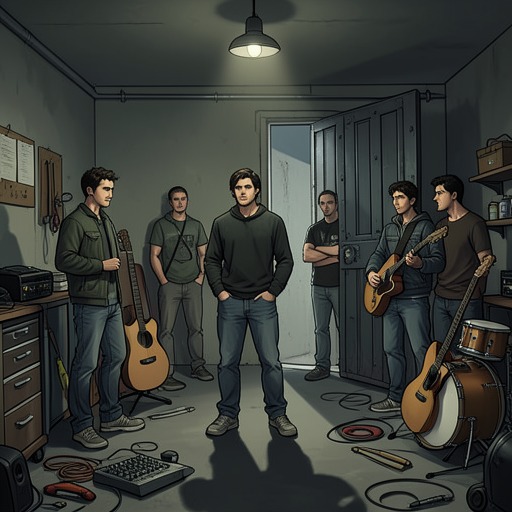
After Daisy’s performance with The Six at the Whisky, Runner announced that she would open the band’s Numbers Tour. Billy Dunne tried to persuade Rod Reyes, Teddy Price, and Rich Palentino to remove her from the bill. He was forced to accept the decision when ticket sales climbed and additional dates were added. As the group set out, “Honeycomb” had just reached the Top 20. Daisy’s arrival therefore changed the band’s prospects as well as its internal balance: her presence was already drawing a larger audience, even as Billy resisted it.
When Daisy was invited to join the album, she made her understanding of the arrangement explicit. She wanted to be a member of the team, an important one, and expected the record to belong to her as much as it belonged to Graham, Warren, Pete, Eddie, Karen, or Billy. Her insistence was not simply a request for inclusion. It challenged the assumption that she could contribute her voice while leaving authorship and status to the established group. The question of whether the album was hers, too, made the band’s creative hierarchy impossible to ignore.
That claim was tested in arguments over the music. Billy insisted that “Aurora” remain on the album; Daisy accepted that decision but rejected another of his songs. His later account marks the disagreement as the moment he recognized how completely she committed herself to the work: she cared intensely and was prepared to put her whole self into it, even when he made collaboration difficult. He also knew Teddy believed Daisy could help the band sell out stadiums. Billy agreed to work with her. The handshake joined commercial calculation to a new respect for her artistic force, without erasing the conflict that had brought them there.
Image, Audience, and Recognition
The album’s visual identity made Daisy’s public image part of the group’s story. Photographer Freddie Mendoza arranged a shoot in the Santa Monica Mountains after hearing early tracks and imagining the band against desert mountains. During the session, Daisy and Billy stood at opposite ends of the group. Mendoza kept taking photographs as Daisy looked toward Billy; for a brief moment Billy turned and met her gaze. The resulting image caught a connection that the posed group arrangement did not explain, and Mendoza recognized its emotional power.
The photograph’s later significance exceeded the circumstances of the shoot. A biographer recalls the cover as defining for teenagers in the late seventies, particularly girls, because Daisy’s appearance seemed self-possessed rather than arranged to please either Billy or the viewer. Her image became a form of public authorship alongside the songs: a woman could be visible and desired without the image reducing her to someone else’s possession. Daisy’s cultural impact thus rested not only on what she sang, but on how audiences read her control over the way she appeared.
The same convergence of music, clothing, and authority marked her acceptance of the Grammy for Record of the Year. She appeared with disheveled hair, bangles reaching her elbows, and a thin cream silk dress; the biographer recalls her as confident in her talent and entirely in command of the band. Soon afterward, a video of the group performing “Impossible Woman” at Madison Square Garden showed Daisy singing with fearless command of the high notes while Billy kept his eyes on her. In the months after leaving Niccolo Argento, she was widely discussed in magazines and admired across rock music. The public image was powerful, but it also rested on a period in which she felt more fully in control of herself.
Love, Addiction, and the Cost of Performing
Daisy’s feelings for Billy became harder to hide after she left Niccolo. During a televised performance, Billy began playing and Daisy caught his eye. Without Niccolo as a distraction, or drugs keeping her mentally absent, she recognized that she loved Billy. His marriage to Camila did not make the feeling disappear; neither, she realized, could her earlier choices of travel, marriage, or intoxication. The recognition brought clarity but no easy resolution.
That clarity changed the experience of performing with him. Daisy described denial as a refuge she had lost after leaving Niccolo, singing with Billy on live television, and telling him she wanted to get clean. Each night onstage became painful. “Young Stars” and “Please” carried her hope that Billy would acknowledge what passed between them, while “Regret Me” no longer felt like an expression of anger so much as sadness. The repeated performance of “A Hope Like You,” after the pair had sung it on Saturday Night Live, sharpened the divide between what an audience wanted to see and what Daisy could bear to feel. The songs were public, but their emotional meaning was not safely contained by the performance.
Daisy also came to understand addiction as something that intensified the feelings it was meant to dull. She reflected that drugs could make heartbreak harder and good times higher, until coming down began to feel like the return of sanity. Yet sobriety did not erase the reasons she had wanted to escape her feelings. This distinction matters in her arc: recovery is not presented as a simple cure for pain, but as the condition that allows her to face what she had been avoiding. Her demand for artistic control and her need for sobriety converge in a difficult recognition of what she can no longer keep denying.
Departure and a Life After the Band
During the Chicago tour, Camila Dunne asked Daisy to leave the band. Camila framed the request conditionally: if Daisy had moved on and could let Billy move on, she need not act on it; if Camila was right about Daisy’s feelings, leaving, getting clean, and finding a life away from Billy could help Daisy and protect Camila’s children. Daisy later said that Camila’s request was the reason she left, and that leaving was the best thing she had done. She described Camila as having saved her from herself. The account gives Daisy’s departure a personal and ethical dimension beyond a change in the band’s lineup: she accepted a boundary that redirected her toward her own survival.
After leaving Chicago, Daisy went straight to Simone and told her everything; Simone got her into rehabilitation. Daisy has been sober since July 17, 1979. She credits that decision with making possible what followed: leaving the music business, publishing books, meditating, traveling, adopting sons, and opening the Wild Flower Initiative. Those later choices do not cancel the ambition that first drove her to write songs or the acclaim she achieved with The Six. They show instead that her life did not have to remain organized around the band, the stage, or her feelings for Billy. Daisy’s decisive act is not winning a place in rock history, but leaving a world she could no longer inhabit safely and building a life beyond it.